
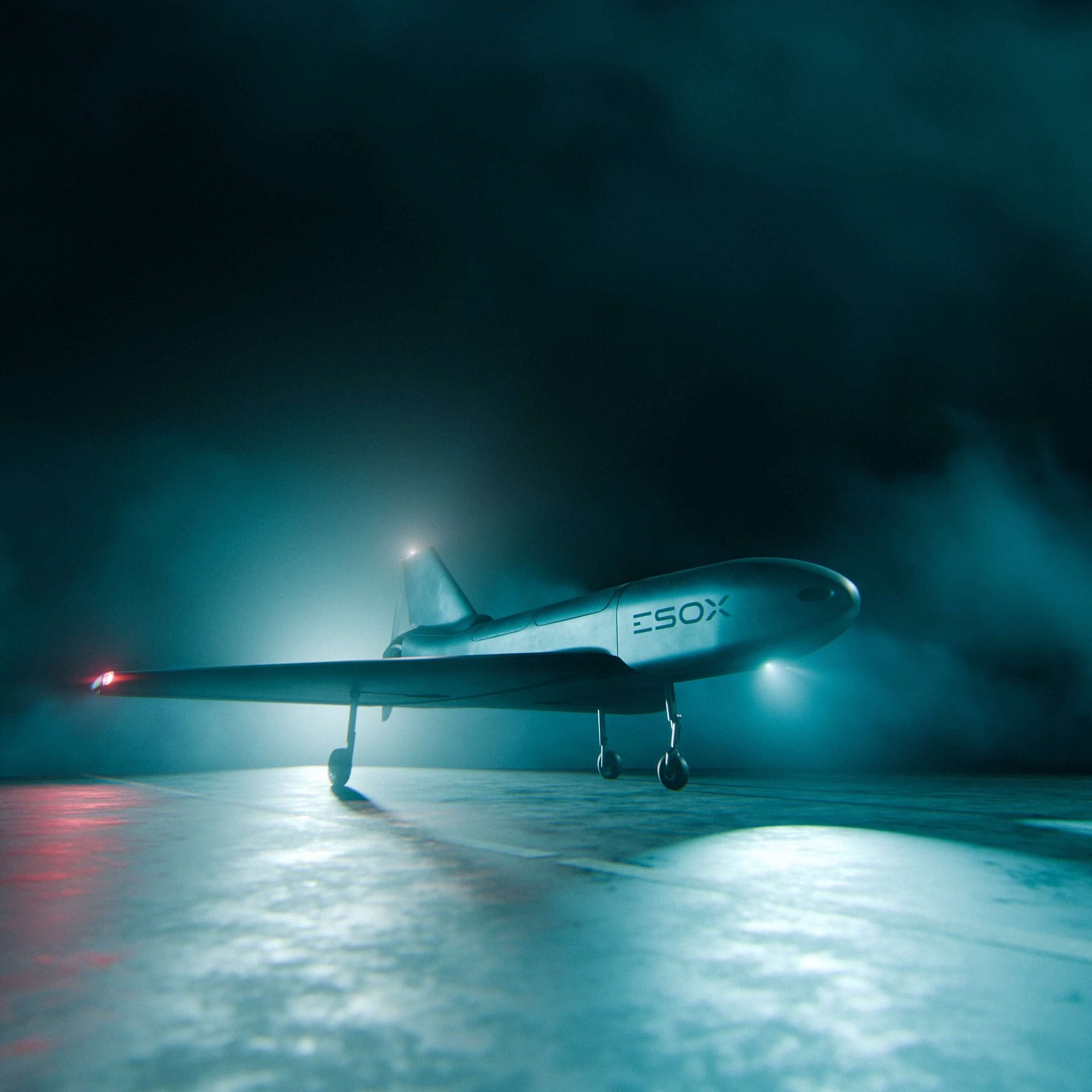
Unmanned aerial systems (UAS) are transforming defence and aerospace. They are lighter, faster to deploy, and can take on missions that would otherwise put aircrews at risk. Yet, for all the progress in airframe design, autonomy, and sensors, propulsion technology has lagged behind. Many drones in service today still rely on what are effectively scaled-up hobby motors, designed for consumer or model aircraft use. These are affordable and easy to source, but they fall short when measured against the performance, endurance, and reliability requirements of modern defence.
A new class of electric propulsion is beginning to emerge that could establish a new benchmark. Donut-shaped motors – so called because of their hollow ring design – are one of the most promising innovations. Originally conceived for civilian mobility, these motors are now being adapted for aerospace and defence applications, where their unique combination of power, simplicity, and efficiency offers clear advantages. Companies like ESOX Group have been established specifically to take this technology into the defence domain.
Why shape matters
Traditional motors concentrate active materials around a central shaft. Donut motors invert that logic. By pushing the active materials to the rim of the ring, engineers increase the distance at which force is applied. The result is greater torque for the same weight, coupled with a larger circumference that allows more material to be packed in without penalty. In practical terms, it means significantly higher torque and power density in a compact package.
This architecture also removes the need for gearboxes, drive shafts, or other mechanical complexity. Fewer parts means fewer points of failure and faster assembly – important in defence environments where availability and serviceability can be mission-critical.
The case for UAS
These properties translate directly into advantages for unmanned systems. For medium and heavy-lift drones, torque at zero RPM enables strong take-off performance and efficient payload handling. Donut motors can be paired with optimised propeller systems to deliver lift with high fidelity control, whether for precise manoeuvring or for maintaining stability under heavy load.
One of the strongest signals from prospective customers is that payload capacity matters more as UAS grow in size and mission scope. The ability of donut motors to deliver high torque without the weight penalty makes them especially relevant for larger platforms, where carrying heavier payloads can mean the difference between a niche capability and a mission-critical asset.
Their acoustic and thermal profiles are also attractive. With no gearbox and fewer frictional losses, donut motors run quieter and cooler than conventional alternatives. For defence users, that stealth characteristic adds operational value.
The technology scales across a range of diameters – from small motors suitable for multicopter platforms to larger versions capable of powering logistics drones or ground support vehicles. This flexibility makes them suitable for a spectrum of UAS missions, from surveillance to supply delivery.
From hobby-grade to defence-grade
One of the most striking changes in recent conflicts has been the use of low-cost drones. Off-the-shelf platforms have demonstrated their utility in surveillance, targeting, and even strike roles. But they also reveal the limitations of consumer-derived components. Motors designed for model aircraft cannot always cope with sustained load, harsh weather, or military-grade duty cycles.
As demand grows for larger payloads, longer endurance, and greater reliability, the industry is moving towards dedicated defence-grade propulsion. That shift requires supply chain resilience. Motors sourced through open commercial channels are vulnerable to disruption, export restrictions, or geopolitical leverage. For governments and manufacturers, secure and sovereign propulsion supply chains are becoming as important as the technology itself.
Integration with intelligent systems
Modern propulsion is not only about hardware. Control electronics and software play a central role in managing energy use, balancing performance with endurance, and protecting batteries from stress. Integrated propulsion suites are emerging that combine motors, battery systems, control modules, and intelligent software into a single system.
For UAS designers, this means propulsion can be tuned to specific missions. High-fidelity torque vectoring can deliver agility for rapid manoeuvres, while efficient energy management extends flight time for reconnaissance or logistics roles. Donut motors are well suited to such integration because of their simplicity and modular design.
Shaping the future of UAS propulsion
The next decade of unmanned systems will be shaped as much by propulsion as by autonomy or airframe design. As drones grow in size and complexity, the need for propulsion systems that are powerful, efficient, and reliable will only increase.
Donut-shaped electric motors, adapted from pioneering work in civilian mobility, offer one of the clearest pathways forward. Their combination of torque density, simplicity, stealth characteristics, and scalability aligns closely with the operational needs of defence users. Just as importantly, their development is prompting the creation of secure, defence-specific supply chains that reduce dependency on consumer technology and geopolitically exposed sources.
The aerospace sector has a history of adopting breakthrough technologies from adjacent industries and re-engineering them for mission-critical use. Electric propulsion for unmanned systems may be the next example – and donut-shaped motors could be at its centre.
